
What Manufacturing Leaders Should Actually Expect from AI in 2026
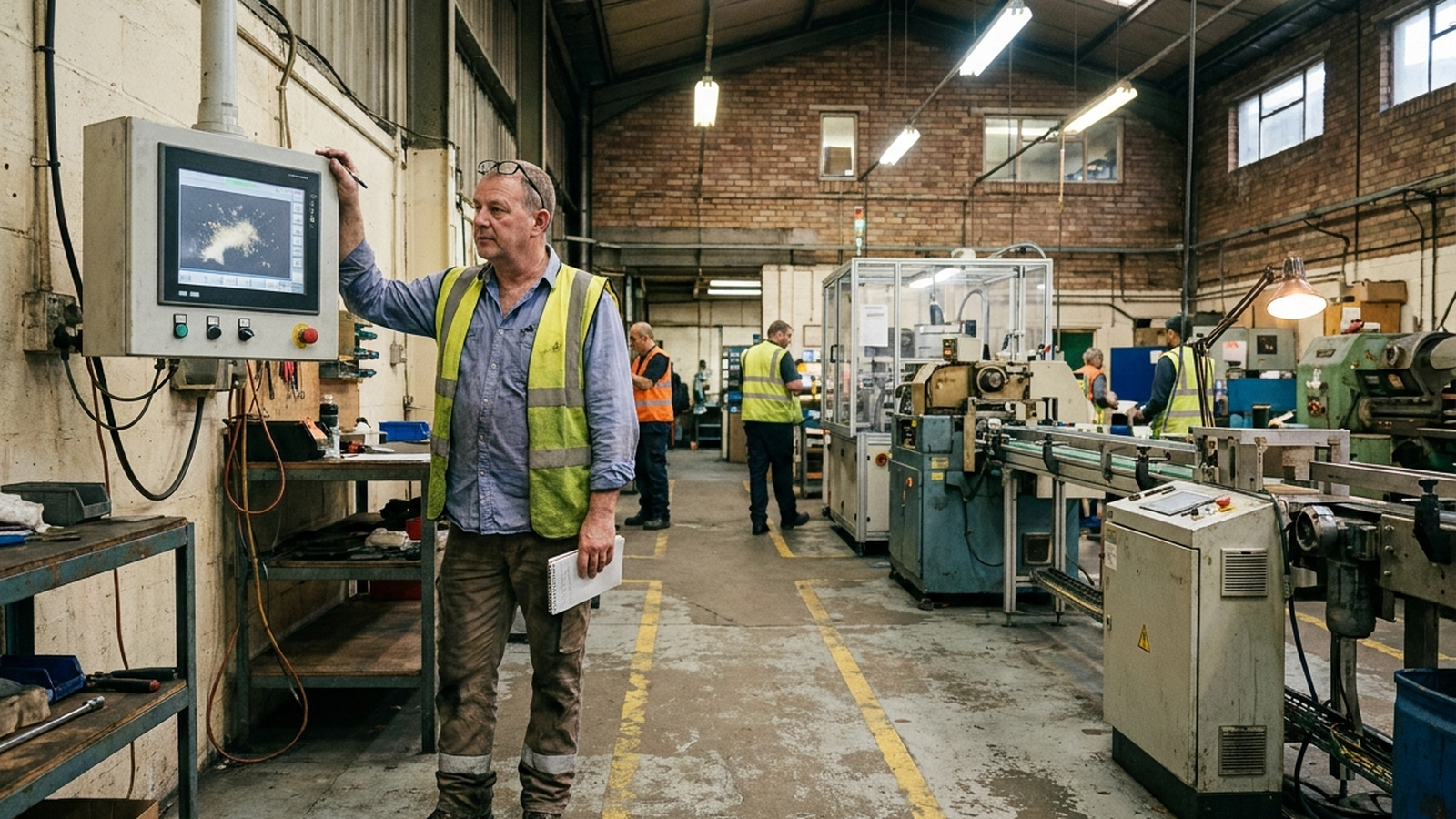
In many manufacturing environments, digital transformation has added systems without fully changing how work actually happens.
Operations remain fragmented. Data is available, but not always usable. Teams still spend too much time connecting the dots.
That context matters when evaluating AI.
By now, manufacturing leaders have heard every version of the AI pitch.
AI is becoming the operating model, not just a feature
AI is no longer just another capability layered into manufacturing systems. It is becoming part of how modern operations run.
- Systems are shifting from systems of record to decision engines
- Seventy seven percent of manufacturers have already deployed AI
- Leading organizations are seeing:
- 10 to 15 percent productivity gains
- Up to 5 percent EBIT improvement
This is not future potential. It is present reality.
But the value is not coming from full automation.
The real value is friction reduction
The biggest misconception about AI in manufacturing is that its primary purpose is automation.
It is not.
The most immediate impact of AI is reducing friction in everyday work. It helps people:
- understand systems faster
- navigate complexity more easily
- move from question to action with less effort
This matters because most environments are still:
- fragmented across systems
- dependent on institutional knowledge
- slow to troubleshoot
Even small improvements compound quickly:
- faster answers reduce downtime
- better guidance reduces errors
- clearer visibility improves decision quality
Why many AI efforts fall short
Many AI initiatives struggle, not because of the technology, but because of how they are implemented.
Common issues include:
- AI added on top of disconnected systems
- fragmented data across planning, quality, and operations
- low trust and low adoption due to lack of context
AI cannot fix structural complexity on its own.
It performs best when:
- embedded directly into workflows
- supported by connected, unified data
- designed for operators, not just analysts
Introducing Advantive ONE, our new intelligence platform vision.
What leaders should expect now
Manufacturing leaders should expect practical, measurable outcomes from AI, including:
- faster access to operational answers without searching across systems
- embedded guidance within workflows
- more responsive and contextual support experiences
- clearer visibility into issues that require attention
- reduced dependence on tribal knowledge
These are not flashy outcomes. They are operational ones.
The shift to connected intelligence
The next phase of AI will not come from standalone tools. It will come from connected environments.
When systems and data are unified, AI can:
- surface insights across functions
- guide decisions in real time
- provide context-aware answers
- help teams act faster with greater confidence
This is the shift from isolated intelligence to connected intelligence.
Why Advantive ONE changes the equation
Advantive ONE is built around a simple principle.
AI should not sit on top of complexity. It should help reduce it.
By connecting MES, planning, quality, shop floor, and supply chain data into a unified environment, Advantive ONE gives AI the context it needs to be effective. It operates as a secure, persistent intelligence layer across Advantive applications like Proplanner, PINpoint, and VIA, bringing automation, real-time insights, and contextual guidance directly into existing workflows.
This allows AI to deliver answers within workflows, support users in real time, and shorten the path from insight to action.
Capabilities such as intelligent support agents, workflow automation, and contextual data assistance are designed to improve usability and reduce operational friction across the business.
This is not about adding intelligence as a feature.
It is about embedding intelligence into how work actually happens.
The bottom line
Manufacturing leaders should stop asking what AI can do in theory.
They should focus on where it can reduce friction in practice.
The real value of AI in 2026 will show up in:
- faster understanding
- better decisions
- smoother execution
The future is not just intelligent systems.
It is systems that make people more effective.
AI should reduce friction, not add complexity. See how Advantive ONE helps manufacturers apply connected intelligence across planning, execution, quality, and shop floor workflows.
- Honest conversation with a product expert
- Discover what products or solutions best fit your needs
- No games, gimmicks, or high-pressure sales pitch
Sharon DiRe
About the Author Latest Posts
- What Manufacturing Leaders Should Actually Expect from AI in 2026 May 5, 2026
- Throughput vs. Waste Is a False Tradeoff in Packaging Operations April 23, 2026
- Packaging Performance Doesn’t Break on the Line. It Breaks in Your Operating Model April 21, 2026
- Why Manufacturing Still Feels Reactive After Digital Transformation April 7, 2026
- AI in Packaging: Why Most Initiatives Stall Without Real-Time Plant-Floor Visibility April 2, 2026
Reviewed by
Manufacturing operations review panel
Content on MES, manufacturing execution, traceability, and process planning is reviewed by the ProPlanner, PINpoint, ParityFactory, VIA Information Tools, and ComSense teams — covering discrete manufacturing, automotive tiered supply, and food-and-beverage traceability.