
Throughput vs. Waste Is a False Tradeoff in Packaging Operations
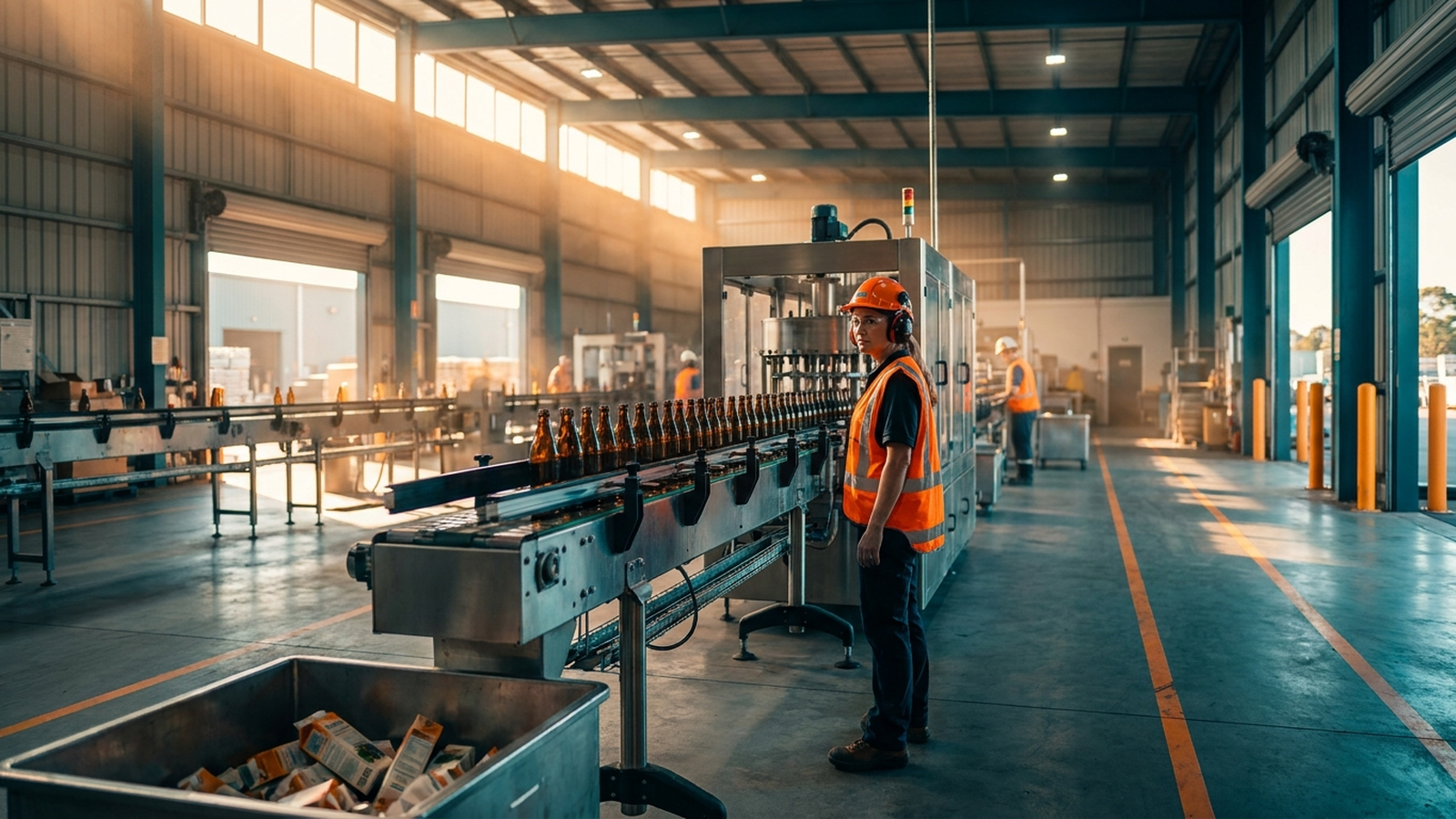
Packaging leaders are often forced into a familiar tradeoff.
Run faster to increase throughput and risk more scrap or quality issues. Tighten controls to reduce waste, and production speed may suffer.
But this is the wrong way to frame the problem.
The Tradeoff Is Often Misdiagnosed
Throughput and waste are not naturally opposing forces. In many cases, they are driven by the same underlying issues.
When teams lack timely, consistent insight into what is happening on the plant floor, they are forced to react instead of respond with precision. Decisions become defensive. Adjustments come too late. Small issues grow into larger performance problems.
That is when throughput and waste start to look like competing priorities.
The Same Problems Drive Both Outcomes
In high-speed packaging environments, the factors that reduce throughput often increase waste at the same time.
Common examples include:
- Short stops that disrupt line speed and create inconsistent output
- Inefficient changeovers that reduce uptime and increase material loss
- Process variation that leads to both defects and slower production
- Late detection of issues that results in rework, scrap, and lost output
These are not separate problems. They are shared sources of inefficiency.
When those root causes are not visible early enough, teams are forced into tradeoffs that should not exist.
Why Teams End Up Choosing Between Speed and Control
Most packaging operations have data across production, quality, maintenance, and shipping. The challenge is that it is not aligned in a way that supports real-time decisions.
As a result:
- Production teams push for output without full visibility into emerging quality risks
- Quality teams tighten controls after issues appear, slowing production
- Maintenance teams identify risks that are not yet reflected in production performance
- Shipping teams adjust priorities based on incomplete or delayed production signals
Each function acts based on its own perspective. Without shared context, decisions conflict instead of reinforce each other.
This is not a capability issue. It is a coordination gap.
Better Insight Changes the Equation
When teams can see issues earlier and understand their cross-functional impact, the dynamic shifts.
Instead of reacting after performance declines, they can:
- Address small disruptions before they affect output
- Stabilize processes to improve both speed and consistency
- Reduce variation that leads to scrap and rework
- Align production output more closely with shipping and delivery needs
Throughput improves because operations are more stable. Waste decreases because issues are resolved before they escalate. Downstream disruption is reduced because shipping is working from more accurate, real-time information.
The tradeoff disappears.
What This Means for Packaging Leaders
Leaders should not be asking whether to prioritize throughput or waste.
They should be asking:
- Where are the same issues affecting both output and material efficiency
- How early can we detect and respond to variation
- Are production, quality, maintenance, and shipping working from a shared understanding of performance
- Which decisions are still being made with incomplete context
The goal is not to balance competing priorities. It is to remove the conditions that create the tradeoff in the first place.
See Advantive ONE in Action – AI-powered answers at your fingertips.
Turning Insight into Action with Advantive ONE
This is where Advantive ONE plays a critical role.
Advantive ONE in an intelligence platform layered across all Advantive products, including Kiwiplan, Abaca, and Advantzware, and brings together data across production, quality, maintenance, and shipping to help teams identify the root causes that impact both throughput and waste, while also improving downstream coordination.
By using AI to continuously align this information in real time, teams can:
- Detect issues earlier
- Understand how they affect multiple aspects of performance
- Align production decisions with shipping requirements
- Take more targeted, coordinated action
Instead of managing tradeoffs, teams can focus on eliminating the underlying sources of inefficiency.
The result is stronger throughput, lower waste, and more reliable delivery performance.
Rethinking the Tradeoff
Throughput vs. waste is a false tradeoff in packaging operations because both are often driven by the same problems.
When those problems are addressed early and with the right context, performance improves across the board.
The opportunity is not to choose between speed and control, but to operate in a way that makes both achievable.
Where to Go from Here
If your operation still feels forced to choose between throughput and waste, the issue may not be your targets. It may be how performance is being understood and managed.
Advantive can help you identify where these tradeoffs are being created and how to remove them through a more connected, insight-driven approach.
- Honest conversation with a product expert
- Discover what products or solutions best fit your needs
- No games, gimmicks, or high-pressure sales pitch
Sharon DiRe
About the Author Latest Posts
- What Manufacturing Leaders Should Actually Expect from AI in 2026 May 5, 2026
- Throughput vs. Waste Is a False Tradeoff in Packaging Operations April 23, 2026
- Packaging Performance Doesn’t Break on the Line. It Breaks in Your Operating Model April 21, 2026
- Why Manufacturing Still Feels Reactive After Digital Transformation April 7, 2026
- AI in Packaging: Why Most Initiatives Stall Without Real-Time Plant-Floor Visibility April 2, 2026
Reviewed by
Packaging operations review panel
Content on corrugator scheduling, packaging ERP, and converter operations is reviewed by the KiwiPlan, Abaca, and AdvantZware product teams, who build software specifically for corrugated, folding-carton, and packaging converters.