
From Compliance to Optimization: Why Beverage Bottlers Are Rethinking Quality
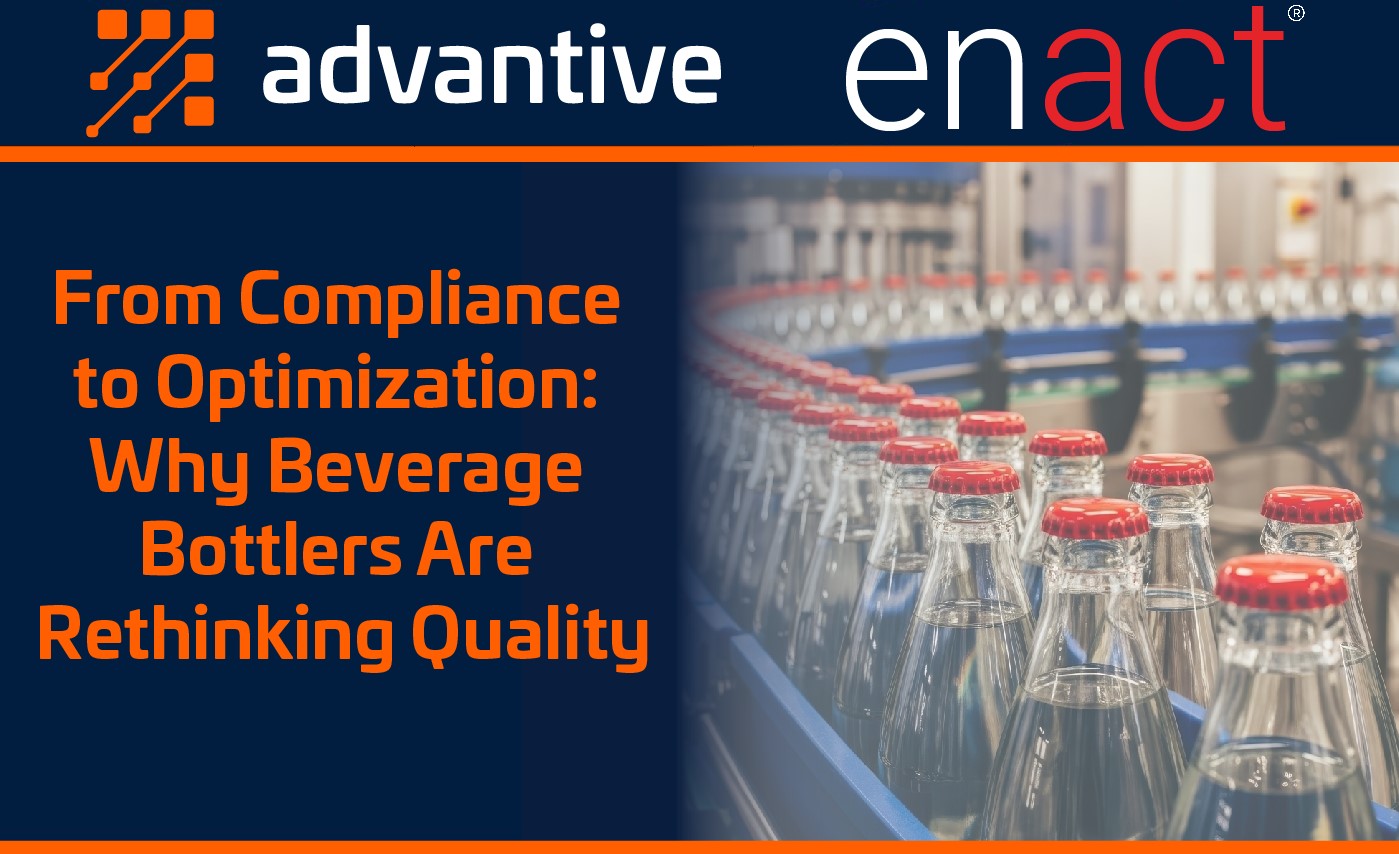
In high-speed beverage bottling, every second and every milliliter matters. Whether you’re producing 15,000 bottles an hour or managing multiple plants worldwide, small inefficiencies in fill volume, quality checks, or line performance can quietly erode profitability.
For many years, quality systems in the bottling industry have been implemented primarily for compliance purposes. While necessary and effective, tools designed to meet regulatory requirements, pass audits, and maintain certifications have a narrow focus and often leave untapped opportunities for process improvement, cost reduction, and sustainability gains.
Today, a growing number of beverage manufacturers are rethinking the role of their quality systems. They’re shifting from reactive, compliance-driven models to proactive, data-driven approaches where Statistical Process Control (SPC) software is not just a safeguard, but a strategic enabler of manufacturing process optimization.
The Hidden Cost of “Good Enough”
Traditional quality management approaches—relying on spreadsheets, paper checklists, or siloed software—are still common in bottling. These methods can provide audit documentation, but they fail to deliver the timely insights needed to correct process issues before they cause waste or downtime.
The hidden costs show up in several ways:
- Overfill waste: Adding even 0.5 mL more product than necessary to each bottle can result in tens of thousands of gallons lost annually across high-speed lines. This is product you’ve paid to produce but cannot sell.
- Underfill risks: Falling below the legal net content can trigger recalls, regulatory penalties, or damaged customer trust—costs that extend far beyond the production floor.
- Process drift: Without continuous monitoring, machinery wear, temperature changes, or raw material variation can push processes out of specification, leading to scrap and rework.
- Inconsistent practices: Different plants, shifts, or operators may apply quality checks differently, creating variability that undermines both efficiency and compliance.
These inefficiencies compound in high-volume beverage production, especially when managing multiple product SKUs, package sizes, and production lines. What looks like a small variation at the unit level quickly becomes a significant financial drain when multiplied across millions of units.
Enact for Bottlers: Built with the Industry, for the Industry
At Advantive, we’ve worked with beverage bottlers across water, soft drinks, beer, and ready-to-drink markets. The recurring theme? The need for a standardized, real-time SPC platform that delivers actionable data on the floor.
Enact for Bottlers is our answer—a specialized implementation of the InfinityQS SPC software solution designed with bottlers, for bottlers. This isn’t generic quality software retrofitted for beverage. It’s a solution shaped by industry expertise and customer feedback, integrating best practices from the most successful bottling operations.
With Enact for Bottlers, manufacturers gain:
- Preconfigured quality templates for fill volume, torque checks, seam inspections, label accuracy, carbonation levels, and more
- Real-time, centralized data collection that aggregates results from every line, shift, and plant into a single platform
- Automated alerts that notify operators of trends toward nonconformance before product is at risk
- Faster, cleaner audits thanks to a centralized digital record of quality data, reducing prep time by more than 80%
By embedding quality control into the live production process, Enact transforms quality from a back-office recordkeeping function into a front-line operational advantage.
What It Unlocks for Bottlers
Beverage bottlers using Enact report measurable and sustained improvements:
- 15%+ reduction in overfill and scrap by tightening fill volume control
- 80% faster audit preparation, freeing quality teams to focus on prevention rather than paperwork
- Standardized quality routines across multiple sites, reducing variability and improving training for new operators
- Smarter decision-making driven by real-time SPC dashboards that highlight process shifts as they happen
For some bottlers, Enact has also enabled cross-site benchmarking, where managers can compare performance metrics across plants to identify best practices and drive continuous improvement company-wide.
These gains don’t just improve profitability—they also support ESG initiatives. Less overfill means reduced raw material use, lower energy consumption, and decreased waste disposal needs. That’s operational efficiency and sustainability working hand in hand.
Why Now Matters
The beverage bottling industry is undergoing rapid transformation:
- Regulatory pressure is increasing, with net content compliance, food safety standards, and traceability requirements all becoming more stringent.
- Consumer expectations for consistency are higher than ever, fueled by social media and instant feedback channels.
- ESG commitments from corporate leadership are pushing sustainability tracking down to the production floor.
- Cost volatility in ingredients, packaging, and labor means efficiency improvements directly protect margins.
In this environment, the “check-the-box” approach to quality is no longer enough. Manufacturers need systems that deliver real-time insights, standardize performance, and scale across operations.
Enact for Bottlers is proven, fast to deploy, and adaptable to any bottling operation—whether you’re running a single high-speed water line or managing a global portfolio of beverage brands.
It’s time to expect more from your quality system—and to see it as the competitive advantage it can be.
Take the first step from quality to excellence
Mark Pickett
About the Author Latest Posts
- Why B2B Self-Service Still Fails May 12, 2026
- The Inventory Accuracy Problem Is Now a Growth Problem May 7, 2026
- Why Spreadsheets Break During Peak Construction Season May 5, 2026
- Real-Time Quality Is No Longer Optional April 28, 2026
- Margin Under Pressure: How Distributors Can Protect Profitability Without Slowing Growth April 16, 2026
Reviewed by
Quality & SPC review panel
Articles on statistical process control, capability indices, control charts, and quality management are reviewed by the product teams behind InfinityQS, WinSPC, and PQ Systems (SQCpack and GAGEpack) — the SPC and quality platforms deployed across food, automotive, pharma, and CPG manufacturers.