
AI for Packaging Plant Floor Visibility
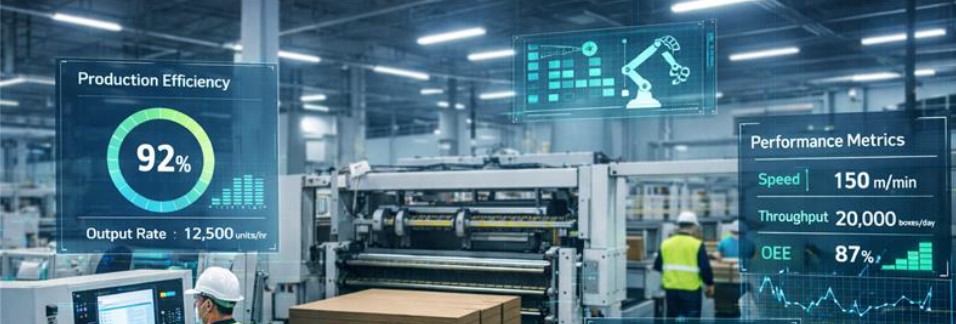
AI in packaging is getting a lot of attention, but many manufacturers are approaching it the wrong way.
AI is not just another layer of automation. It is becoming part of how modern operations run, shifting systems from systems of record to systems that actively guide decisions.
The issue is not whether AI can deliver value. It can. The problem is that many operations are layering AI on top of incomplete, delayed, or disconnected plant-floor data. When that happens, AI does not improve performance. It amplifies blind spots.
In corrugated and other packaging environments, the real opportunity is not starting with AI. It is starting with visibility.
Why AI in Packaging Matters Now
Packaging operations are under pressure from every direction.
Shorter production runs, rising material costs, labor constraints, and increasing expectations around sustainability are forcing plants to operate with tighter margins and less room for error. At the same time, customers expect faster turnaround, more customization, and consistent quality.
AI promises better decision-making, from scheduling and uptime to waste reduction and efficiency.
It is already delivering value across manufacturing, improving throughput, reducing inefficiencies, and strengthening performance.
But those outcomes depend on one thing. Accurate, real-time insight into what is actually happening on the plant floor.
Without that, AI is operating on assumptions.
The Misconception: Starting with AI
Many manufacturers begin their AI journey with dashboards, predictive tools, or advanced analytics.
Those tools can be valuable, but they do not solve the core problem if the data behind them is incomplete or delayed.
There is a common belief that more analytics will create clarity. In reality, analytics without reliable data often creates false confidence.
Many AI initiatives stall for a predictable reason. They are layered on top of fragmented systems and disconnected data.
When AI is treated as an add-on instead of being embedded in operational workflows, it creates complexity instead of clarity. Teams do not trust the outputs, adoption slows, and expected gains never materialize.
If production data is manual, fragmented, or delayed by even a few hours, AI outputs will be limited at best and misleading at worst.
In packaging, where performance shifts minute by minute, yesterday’s data is already too late.
Visibility Is the Real Bottleneck
Many plants believe they have visibility because they have reports.
But reporting is not visibility.
If performance is only reviewed after a shift ends, the opportunity to act is already gone.
Meanwhile, small inefficiencies compound:
- Slight speed losses
- Repeated short stops
- Minor quality issues
- Inefficient changeovers
Individually, they seem manageable. Together, they erode throughput, increase waste, and compress margins.
Without real-time visibility, they remain largely invisible.
The Intelligent Industrial Enterprise Whitepaper
Where AI Actually Delivers Value
AI is most effective when applied to real operational questions:
- Where are we losing throughput right now
- Which assets are driving recurring downtime
- What patterns are contributing to waste
- Which lines or shifts are underperforming and why
- Where should teams intervene first
With real-time plant-floor data, AI can:
- Detect issues as they emerge
- Reveal patterns across machines, materials, and shifts
- Prioritize actions based on actual impact
- Support faster, more informed decisions
Without that foundation, AI becomes disconnected from the reality it is meant to improve.
A More Practical Approach
Effective AI strategies do not start with algorithms. They start with operations.
Manufacturers should focus on three foundational layers:
1. Data Capture
Accurate, automated production data from the plant floor
2. Real-Time Visibility
Immediate insight into performance, downtime, and waste
3. AI and Optimization
Using AI to identify patterns and guide decisions
Build these in the right order, and AI becomes a multiplier, not a gamble.
Turning Visibility into Action
This shift is also changing how packaging software needs to work.
For many manufacturers, the issue is not a lack of data. Data already exists across estimating, scheduling, production, and ERP systems. The challenge is that it is not unified for real-time use.
That is where integration becomes critical.
At Advantive, we have integrated Advantive ONE across packaging solutions like Kiwiplan, Abaca, and Advantzware to help manufacturers organize and activate the data they already have. By bringing operational, financial, and quality data together, teams gain a more complete and consistent view of performance.
By connecting plant-floor activity with core business systems, manufacturers can move toward a single, consistent source of truth where data supports decisions in real time.
That is what makes AI practical. It can finally operate with the context needed to deliver meaningful, actionable insight.
What This Means for Operations Leaders
This shifts the question from “How do we implement AI?” to “Are we giving AI the right environment to succeed?”
In many cases, the next step is not more advanced analytics.
It is:
- Cleaner, more consistent data
- Better-connected systems
- Real-time visibility into production
Without that foundation, even the most advanced AI tools will underdeliver.
AI Starts on the Plant Floor
AI will play a critical role in the future of packaging.
But it will not create clarity. It will expose whether that clarity already exists.
The manufacturers who see real impact will not be the ones chasing the latest AI capabilities. They will be the ones who can see their operations clearly enough to apply AI where it matters.
In packaging, performance is not determined in a dashboard. It is determined on the plant floor.
The real value of AI is not hindsight. It is foresight. And that only works when it is grounded in what is happening in real time.
- Honest conversation with a product expert
- Discover what products or solutions best fit your needs
- No games, gimmicks, or high-pressure sales pitch
Sharon DiRe
About the Author Latest Posts
- What Manufacturing Leaders Should Actually Expect from AI in 2026 May 5, 2026
- Throughput vs. Waste Is a False Tradeoff in Packaging Operations April 23, 2026
- Packaging Performance Doesn’t Break on the Line. It Breaks in Your Operating Model April 21, 2026
- Why Manufacturing Still Feels Reactive After Digital Transformation April 7, 2026
- AI in Packaging: Why Most Initiatives Stall Without Real-Time Plant-Floor Visibility April 2, 2026
Reviewed by
Packaging operations review panel
Content on corrugator scheduling, packaging ERP, and converter operations is reviewed by the KiwiPlan, Abaca, and AdvantZware product teams, who build software specifically for corrugated, folding-carton, and packaging converters.