
Operators Play a Critical Role in Your Quality Initiatives: Quality Pro Series #3
Welcome back to the blog series written specifically for you, the quality professional. In the first blog of this series, we talked about how you can apply your statistical process control (SPC) analysis holistically across your plant and your enterprise to truly enjoy the great benefits that SPC can provide. And in blog two we discussed data collection–specifically, how shop floor data can be rolled up across production lines and products to provide a “macro view” of quality for quality professionals and managers.
In this blog we’ll discuss the critical role that operators play in your quality system. It’s crucial that you engage operators and support their shop floor quality activities. In this blog, we’ll discuss how your SPC system can help ensure you’re getting the right data at the right times, so operators get it all done without overburdening them.
Operators Do It All
Make no mistake, operators are vital to quality in the manufacturing world. They are the frontline soldiers in the war against rising costs and manufacturing imperfections.
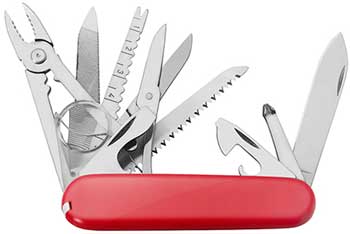
Operators need lots of information to do their jobs—to make sure the products they make are the best they can be. They are the Swiss Army knives of manufacturing. They need to:
- know standard operating procedures
- understand engineering drawings
- be up-to-date on compliance regulations
- be conversant in all tests/checks and schedules
- be an expert with their machine(s)
- know safety regulations
And that’s just a partial list. They also need to know how to deal with all the people who are pinging them every day: supervisors, quality managers, inspectors, maintenance folks, and engineers, just to name a few. Being an operator is a very challenging job, and we need to help make operators’ lives just a little bit easier on the shop floor. That’s where your organization’s SPC system can make a huge difference.
Support Your Operators
The operator already uses his full Swiss Army knife of tools to remain on top of everything, and then we ask them to perform a bunch of quality activities. It’s a lot for operators to manage. They only have so much time in the day to devote to tasks outside of making good products.
As quality professionals, we must be aware of the pressures and time constraints that operators are faced with, and we must find ways to support their quality activities—such as data collection. We need to make those tasks as easy as possible for operators. And we must help them see how the information gained from these activities can help them make better products while making their challenging jobs a little easier.
We can also help operators by automating notifications, such as when data collection or compliance checks are due. Providing automatic reminders takes the guesswork out of when to gather data. It means that they don’t have to keep checking a clock on the wall or continually glancing at their wristwatch. And it means that there is little possibility of forgetting a data check or violating critical compliance requirements.
Furthermore, the right SPC system should automatically alert an operator when the data they have collected indicates a significant change or shift in machine performance. These automated alerts can help operators prevent out-of-specification events that can shut down production lines and cause huge hits to the bottom line.
Whether it’s fully automated, semi-automated, or manually collected, all quality data should feed into a single system where it can be aggregated and summarized across production lines and plants. Ultimately, it is your aggregated shop floor data that can provide a “macro view” of quality for quality professionals and managers, helping you to reduce costs and transform business performance.
On Board with Quality
Basically, if you want this type of valuable data, you’ve got to win the hearts and minds of operators. We can do that by being engaged with them and supporting their unique needs and time constraints. And if we are going to ask them to collect data for us, we’d best find a system that will make data collection fast, simple, and easy. If we can do that, then the operators benefit, and we get the valuable quality data that we need to improve overall operational performance. It’s a “win-win” for everyone.
In our next blog, we’ll take a look at how the right SPC solution can help take the pain out of the audit process and help you get customers, auditors, and management the information they need, when they need it.
Read the other blogs in this series:
SPC Should Drive Holistic Quality Improvement: Quality Pro Series #1
Rolled-Up Data Translates into Business Transformation: Quality Pro Series #2
Operators Play a Critical Role in Your Quality Initiatives: Quality Pro Series #3
Get Customers, Auditors, and Management the Info They Need, When They Need/Want It: Quality Pro Series #4
When scaling is required or necessary, SaaS is a Super Hero: Quality Pro Series #5
Grace Barton
Marketing Specialist
About the Author Latest Posts
Grace Barton is a digital marketing and competitive intelligence professional who crafts strategic narratives by bridging marketing insights with analytical expertise. At Advantive, she creates engaging, data-driven content tailored to the distribution, manufacturing, packaging, and quality industries. Her goal is to deliver impactful messaging that drives engagement and growth based on specific gap closure needs, whether responding to sales organization requirements, pinpointing gaps in content, or meeting immediate market trends.
She thrives on transforming competitive intelligence into actionable insights for the sales organization. Grace manages Advantive’s competitive intelligence platform, Klue, to equip the sales team with the battlecards and market data they need to stay ahead of competitors. Since launch, she’s built 28+ battlecards across four lines of business, ensuring the GTM strategy stays sharp.
Grace has a passion for leveraging market insights with storytelling to guide strategic decision-making, empower sales organizations, and nurture organizational growth.
Areas of Expertise: Digital Marketing, Competitive Intelligence, Strategic Narratives, Marketing Insights, Analytical Expertise
- Why Scheduling is Still the Hidden Lever in Corrugated Packaging May 14, 2026
- From Data to Decisions: What AI Could Unlock Inside Your ERP April 30, 2026
- From Data to Direction: Why Advantive ONE Signals a New Era of Industrial AI April 14, 2026
- When the Warehouse Becomes the Bottleneck April 9, 2026
- The Power of Virtual Assistants When They’re Built for Real Work February 3, 2026